
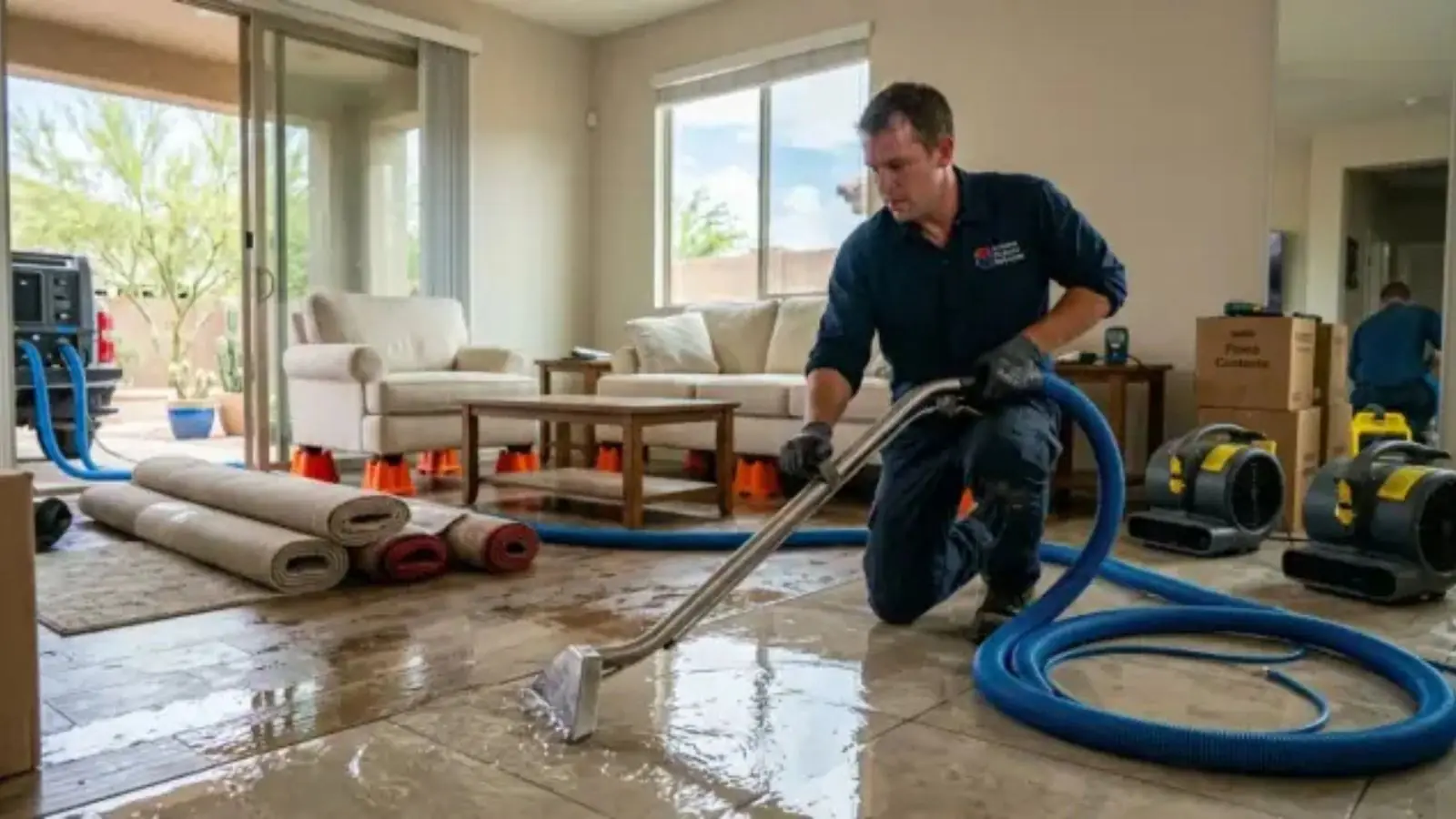
Water Damage Restoration in Amesbury, MA
24/7 emergency dispatch for water damage and mold in Amesbury and nearby Essex County towns. Scope and price are explained before work starts.
- Licensed and insured
- Insurance documentation help
- 24/7 dispatch
Amesbury at a glance
- 🛡Licensed and insured
- 📋Insurance documentation help
- ⏱24/7 emergency dispatch
- 📍Serving Amesbury and nearby towns
Active Water or Mold Problem?
Our dispatch line is answered 24 hours a day, every day of the year. Stop the source if it is safe, then call.
Water damage restoration in Amesbury, MA
Water damage restoration is the work of stopping water, removing it, drying the structure and rebuilding what could not be saved. In Amesbury, MA that work starts with one phone call to a 24/7 emergency dispatch line, and the sooner the call happens the less material has to be thrown away. Wet drywall and insulation begin to grow mold on a short clock, and the state's own homeowner guide tells residents to dry wet areas within 24 hours.
Amesbury Water Damage Pros connects homeowners, landlords and building managers in Amesbury and the surrounding Essex County towns with licensed and insured restoration professionals. Dispatch answers around the clock. Describe what you see, and the crew explains the scope and price before any work starts. Same-day response is available when crews are available, and no one on the line will promise an arrival time they cannot keep.
The pages below cover each stage of the job, from water mitigation in the first 72 hours to water damage repair once the structure is dry. If the water is still moving, skip the reading and call (978) 252-8637.
What we handle in Amesbury
Water Damage Repair
Rebuilding drywall, insulation, flooring and paint once the structure is dry.
Water Damage Repair in Amesbury →Flood Damage Restoration
Basement, storm and river water, including Category 2 and 3 water.
Flood Damage Restoration in Amesbury →Water Mitigation
The first 24 to 72 hours: stop the damage, map moisture and start drying.
Water Mitigation in Amesbury →Water Damage Cleanup
Removing wet debris, sanitizing surfaces and clearing odor after water is stopped.
Water Damage Cleanup in Amesbury →Emergency Water Removal
Pumps and extraction units pulling standing water out right now.
Emergency Water Removal in Amesbury →Mold Remediation
Containment and removal of mold growth, following published S520 practice.
Mold Remediation in Amesbury →What to do in the first hour
Emergency water damage rewards calm, ordered action. Work through these steps while you wait for the crew, and only do the ones that are safe to reach.
- Stop the source.Shut the fixture valve or the main water valve if you can reach it without standing in water. The city defines the curb stop as the valve that shuts water off from the main to your service, but it gives no homeowner instructions, so find your interior main shutoff before an emergency.
- Protect the electrical side.If water is near outlets, a panel or a power strip, stay out and call the utility or 911 before you call us. Cut power to wet areas only if the panel is dry and easy to reach.
- Lift what you can.Move rugs, small furniture, electronics and paper off wet floors. Pull wet cushions and boxes up onto dry surfaces.
- Photograph everything.Take wide and close photos of the damage, the source and any water height on walls before anything is moved. These photos support an insurance claim.
- Call the 24/7 line.Tell dispatch what is wet, how long it has been wet and whether the water looks clean, gray or contaminated.
Why Amesbury buildings take on water
Amesbury sits where the Powow River meets the Merrimack, and the city's own Community Resilience Building matrix lists the flood and drainage problems residents live with.
It names the Powow River downtown, embankment erosion on the Merrimack, undersized culverts under Route 110 and Elm Street on the Back River and Clark's Pond, the Lake Gardner dam and flood storage, and road flooding on Elm Street and Pleasant Valley Road. If your home sits near one of those, ask your insurer what your policy covers before the next storm, and check the FEMA flood map for your address.
The housing is old too. A state housing plan citing American Community Survey data put 35 percent of Amesbury's housing units as built before 1940. Old supply lines, stone and rubble foundations, mill-era brick and aging roofs all leak in their own way. In Amesbury Center and the Upper Millyard that means basements and ground floors that stay damp. Around The Point and Deer Island, closeness to the river raises the odds of seepage after heavy rain.
A flash flood in 2023 showed the pattern. The city posted a notice that the 4th Street neighborhood is prone to flooding, told residents with damage to file an insurance claim right away, and suggested a sump pump for homes that flood regularly. The Boston area averages 43.59 inches of precipitation a year and about 91 days with a low at or below freezing, so burst pipes and ice dams matter as much as river water.
How a restoration job runs
- 1
Call dispatch.
Describe the damage at any hour and get routed to a crew.
- 2
Assessment.
The crew inspects, takes moisture readings and explains the scope and price before work starts.
- 3
Mitigation.
Extraction, tear-out and drying equipment go in to stop the damage spreading.
- 4
Restoration.
Drywall, insulation, flooring and paint go back once readings show the structure is dry.
Water categories and what they mean for the job
Restoration professionals sort water into three categories, a framework published in the ANSI/IICRC S500 standard for water damage restoration. The category decides what can be dried in place and what must be removed. Ask any company you call whether its crews work to S500.
Time matters because water can move down a category. Clean supply-line water that sits for days in a warm basement can turn into Category 2. Call early and tell dispatch how long the area has been wet.
| Category | Typical source | What usually happens |
|---|---|---|
| Category 1 | Broken supply line, overflowing sink, rain through a clean roof leak | Extract, dry in place, save most materials if acted on quickly |
| Category 2 | Washing machine or dishwasher discharge, toilet overflow with urine only | Extract, remove wet carpet pad and porous materials, clean and sanitize |
| Category 3 | Sewage backup, river or storm flood water, long-standing standing water | Remove porous materials, contain, disinfect, treat as contaminated |
What affects the cost
No honest company can quote a restoration job over the phone without knowing what is wet. Five things set the price, and dispatch will walk through each of them before any crew starts work.
Want your real number? Call (978) 252-8637 and describe the damage.
| Cost factor | Why it matters |
|---|---|
| Water category | Category 3 water needs removal and disinfection, which adds labor and disposal |
| Square footage affected | More wet area means more equipment and more drying time |
| Materials involved | Hardwood, plaster and insulation behave differently than carpet and drywall |
| Drying days and equipment | Air movers and dehumidifiers run until moisture readings reach a dry standard |
| Rebuild scope | Drywall, flooring, cabinets and paint are priced after the structure is dry |
Insurance and your claim
Working with your insurer
Sudden and accidental water damage, such as a burst pipe, is often covered by a homeowners policy. Gradual leaks and neglect often are not, and flood damage is usually excluded and needs separate flood coverage. Check your policy or ask your insurer, and photograph the damage before anything is moved.
The Massachusetts Division of Insurance says sump pump failure and water backup are covered only with an added endorsement, and that flood insurance usually takes about 30 days to take effect.
Equipment you will see on a job
Crews bring moisture meters to find wet material you cannot see, and thermal imaging cameras to spot water behind finished walls. Air movers push dry air across wet surfaces, and LGR dehumidifiers pull the moisture out of the air so it does not settle back into drywall and framing. Truck-mounted or portable extraction units and submersible pumps remove standing water first. Antimicrobial treatment and HEPA air filtration come in when the water was contaminated or mold is present.
Water damage and mold
Mold needs moisture, and a wall that stays wet for more than a day or two gives it that. The state's homeowner guide says porous materials that cannot be dried quickly should be discarded, and that no license is required to perform mold remediation in Massachusetts, so ask any company how it contains and cleans to the S520 standard. Our mold remediation page covers containment, removal and what to expect. Health questions about mold belong with your physician.
Service area: Amesbury and nearby towns
Dispatch covers all of Amesbury, ZIP 01913, and the towns around it. That includes Newburyport (01950), Salisbury (01952), Merrimac (01860), West Newbury (01985) and Haverhill (01830, 01832 and 01835).
Questions about water damage in Amesbury
Do you handle water damage emergencies at night or on weekends in Amesbury?
Yes. The dispatch line is open 24/7, every day, and you can call at any hour with active water. Same-day response is available when crews are available, and dispatch will not promise an arrival time it cannot keep. While you wait, stop the source if it is safe and keep people and pets out of any contaminated water.
How fast should water damage be dried?
The Massachusetts homeowner guide on mold says to dry wet areas within 24 hours, and the state Housing Code requires leaks and floods to be dried within 48 hours. Waiting longer raises the chance that drywall, insulation and framing need to be replaced.
Will my homeowners insurance pay for water damage?
It depends on the cause. Sudden and accidental damage such as a burst pipe is often covered, gradual leaks often are not, and flood damage usually needs a separate flood policy. Check your policy and ask your insurer. We document the damage and the scope of work so you have clear records to share.
Is water damage restoration the same as waterproofing?
No. Restoration dries and repairs damage that already happened. Waterproofing changes the building or the grading so water stays out. If your basement keeps taking water, you need a waterproofing or drainage contractor after we dry the space.
Do you need a permit for water damage repairs in Amesbury?
It depends on the work. Amesbury's Inspectional Services files permits online, and electrical, plumbing and gas permits go only to Massachusetts-licensed tradespeople. The city page does not say whether drywall or flooring repair after water damage needs one, so ask Inspectional Services before rebuilding.
Do you serve the towns around Amesbury?
Yes. Dispatch covers Newburyport, Salisbury, Merrimac, West Newbury and Haverhill as well as Amesbury, and each has its own page with the ZIP codes we serve there.
Damage Spreading Right Now?
Call now and tell dispatch what you see. Same-day response is available when crews are free.
Call (978) 252-8637